Key Points
- Five causes of sewer backups in Greenville and Upstate SC homes: tree root intrusion, clogs from grease and wipes, collapsed or broken pipes, heavy rain overwhelming city sewer, and city sewer line problems.
- According to the U.S. Environmental Protection Agency, sanitary sewer overflows discharge between 23,000 and 75,000 times per year across the U.S. — heavy rain events like those common in Upstate SC summers are a leading trigger.
- Gurgling drains, multiple slow drains, and foul odors are early warning signs — catching them before a full backup can save thousands in damage and cleanup costs.
- Older Greenville and Greer neighborhoods with clay or cast iron pipes are especially vulnerable — these materials deteriorate over decades and are significantly more likely to crack, collapse, or invite root intrusion.
- A backwater valve is one of the most effective single investments for preventing sewage from flowing back into your home during city sewer overflows or heavy rain events.
- If sewage enters your home, stop using all water immediately, keep people and pets away from the affected area, and call a professional plumber — sewer backups are never a DIY repair.
- Contact Chisholm Plumbing, Heating & Air Conditioning for expert sewer and drain service throughout Greenville, Greer, and the Upstate.
Few plumbing problems strike fear in a homeowner’s heart like a sewer backup. It’s messy, smelly, and can quickly turn into a costly disaster. Beyond the damage to floors, walls, and belongings, sewage water carries bacteria and contaminants that make cleanup a serious health hazard.
Here in Greenville, Greer, and the rest of Upstate South Carolina, sewer backups are more common than many people realize. Older neighborhoods with aging pipes, tree-lined streets, and periods of heavy rainfall create the perfect recipe for a messy surprise.
The good news? Most backups are preventable with the right care and awareness. Let’s look at what causes them, and what you can do to protect your home.
How Sewer Systems Work in a Home
Every drain in your home — from the kitchen sink to the shower to the toilet — connects to your home’s main sewer line. This underground pipe carries wastewater away from your house and into the municipal sewer system (or to a septic tank if you’re not connected to city sewer).
When everything’s working properly, you hardly notice this process. But if the main sewer line becomes blocked or damaged, wastewater has nowhere to go — and that’s when it can start flowing back into your sinks, tubs, and toilets.
Why the main sewer line matters more than individual drains: A clog in a single drain affects only that fixture. A blockage in the main sewer line affects every drain in the house simultaneously — which is why backups often appear in multiple locations at once, or why flushing a toilet causes water to rise in a shower drain. If you’re experiencing problems at more than one fixture, the main line is almost always the place to look.
Top Causes of Sewer Backups
Cause 1: Tree Root Intrusion
In older neighborhoods around Greenville and Greer, mature trees often have extensive root systems. These roots naturally seek out moisture, and even the smallest crack in a sewer pipe can invite them in. Once inside, roots can grow rapidly, causing blockages or even breaking the pipe apart.
How root intrusion progresses: Tree roots don’t typically force their way through intact pipe — they find existing vulnerabilities. A hairline crack at a joint, a slightly offset connection, or a pinhole from corrosion is all an opportunistic root needs to enter. Once inside the pipe, the warm, moist environment accelerates root growth dramatically. What starts as a thin tendril can develop into a dense root mass that fills the entire pipe diameter within a few seasons. Regular sewer line inspections using camera technology can identify root intrusion before it reaches a blockage stage — giving you the option of root treatment rather than full replacement.
Cause 2: Clogs from Grease, Wipes, and Other Debris
Your sewer line is only designed to carry water, human waste, and toilet paper. Anything else is a clog risk. Common offenders include:
- Cooking grease and oil — which solidify in pipes as they cool, gradually narrowing the pipe diameter
- “Flushable” wipes — which don’t break down like toilet paper despite the label’s claims
- Feminine hygiene products, paper towels, and dental floss — all of which can snag on pipe irregularities and accumulate into larger blockages
Over time, these items can build up and completely block the line.
Why “flushable” wipes are one of the biggest sewer line offenders: Unlike toilet paper, which is specifically manufactured to dissolve rapidly in water, most wipes — even those labeled “flushable” — retain their structural integrity for hours or days after being flushed. Water utility systems and municipal sewer operators across the country consistently identify non-dispersible wipes as a leading cause of pump station failures and main line blockages. They may flush without incident, but they accumulate in bends, joints, and narrowed sections of your sewer lateral long before reaching the city main.
Cause 3: Collapsed or Broken Pipes
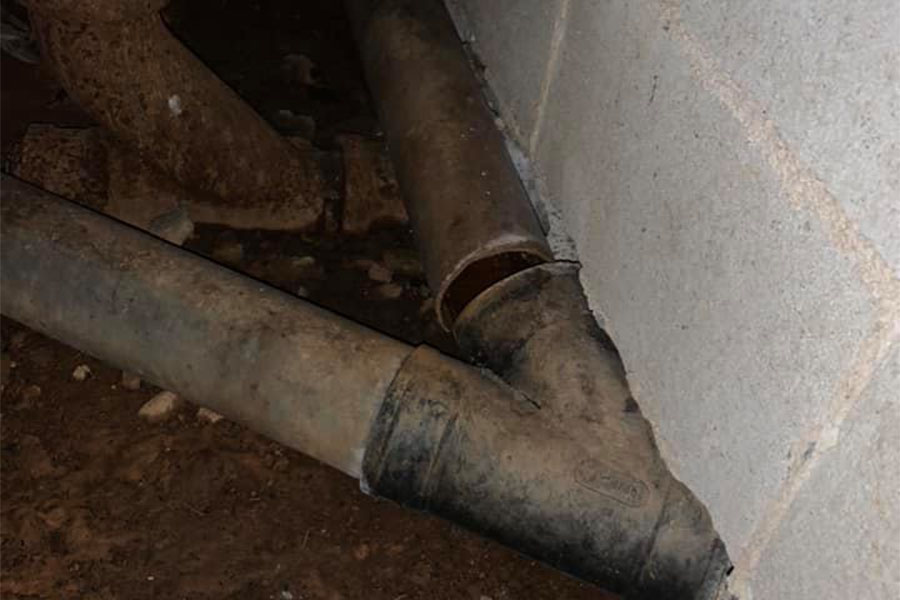
Many older homes in Upstate SC still have clay or cast iron sewer lines. These materials can deteriorate over decades, leading to cracks, collapses, and misaligned joints. Even PVC pipes can be damaged by shifting soil or construction work.
What pipe material tells you about risk: Clay pipes, common in homes built before the 1960s, are especially brittle and highly susceptible to root intrusion due to their bell-and-spigot joint construction — roots enter at the joint gaps. Cast iron pipes from the same era corrode internally over time, developing tuberculation (rough, uneven buildup on the interior surface) that catches debris and narrows the effective pipe diameter. If your home was built before 1970, a sewer line inspection is worth scheduling proactively — even without symptoms — to understand the condition of your line before a collapse becomes an emergency.
Cause 4: Heavy Rain and Flooding
After a stretch of intense rain — something we get plenty of in the summer — the municipal sewer system can become overwhelmed. When that happens, water can back up into connected homes, especially if the property’s sewer lateral is already partially blocked.
Why Upstate SC homes are especially at risk: Greenville regularly experiences intense summer thunderstorms that can drop several inches of rain in a matter of hours. When this stormwater infiltrates aging sewer infrastructure — through cracked pipes, deteriorated joints, or improperly connected roof drains and sump pumps — it can overwhelm the system’s capacity and reverse flow into connected homes. Homes at lower elevations, or in areas with aging lateral connections, bear the highest risk during these events.
Cause 5: City Sewer Problems
Sometimes the issue isn’t on your property at all. If the city’s main sewer line has a blockage or break, backups can occur in nearby homes. In these cases, the city is usually responsible for repairs — but you still have to deal with the mess.
How to determine if the problem is on your property or the city’s: If multiple neighbors on your street experience backups at the same time, the city main is almost certainly the cause. If the backup is isolated to your home, the problem is most likely in your sewer lateral (the section of pipe connecting your home to the city main, which is typically the homeowner’s responsibility). A sewer inspection can confirm the blockage location and determine who is responsible for the repair.
Warning Signs of a Developing Backup
Most sewer backups don’t happen out of nowhere — your plumbing often sends warning signs first. Keep an eye out for:
- Gurgling drains when you run water or flush a toilet
- Multiple slow drains throughout the house
- Foul odors coming from sinks, tubs, or floor drains
- Water backing up in a lower-level fixture when another is in use (e.g., flushing a toilet causes water to rise in the shower)
Catching these signs early can save you from a full-blown backup.
Why acting on early warning signs is so cost-effective: A drain cleaning or camera inspection performed when you first notice gurgling or slow drains might cost a few hundred dollars. A full sewer backup cleanup — including sewage extraction, structural drying, antimicrobial treatment, and potential drywall or flooring replacement — can cost thousands. The warning signs are your plumbing system asking for help before the situation becomes a disaster.
What to Do if You Have a Sewer Backup
If you discover sewage coming up into your home:
- Stop using all water immediately — this prevents more wastewater from entering the system
- Keep people and pets away from the affected area to avoid exposure to bacteria
- Shut off electricity to affected rooms if water levels are high
- Call a professional plumber right away — sewer backups are not a DIY job
At Chisholm Plumbing, Heating & Air Conditioning, we have specialized equipment to locate the blockage, clear it safely, and prevent further damage. For urgent situations, emergency plumbing service is available when you can’t wait.
How to Prevent Sewer Backups
Prevention is always better than dealing with a messy cleanup. Here’s how to reduce your risk:
- Schedule Regular Drain Cleaning Annual or semi-annual drain cleaning helps remove buildup before it becomes a major clog. We use camera inspections to check the health of your main line.
- Manage Tree Roots If you have large trees near your sewer line, regular inspections are essential. In some cases, we can use root-killing treatments to stop growth before it causes damage.
- Watch What You Flush and Pour Only flush toilet paper and human waste. Pour grease into a container and throw it in the trash instead of down the drain.
- Install a Backwater Valve This device allows wastewater to flow out but blocks it from coming back in during a city sewer overflow. For Upstate SC homeowners in flood-prone areas or lower elevations, a backwater valve is one of the highest-value preventative investments available.
- Get Professional Inspections If your home is older, or you’ve experienced backups before, a professional sewer inspection can catch small problems early — saving you from a costly emergency later.
Key Takeaways
Sewer backups in Greenville and Upstate SC are most commonly caused by tree root intrusion, grease and wipe accumulation, collapsed clay or cast iron pipes, heavy rain overwhelming the city sewer system, and city main line problems. Older homes — particularly those built before 1970 with clay or cast iron lines — carry the highest risk and deserve proactive inspection even without symptoms. Warning signs including gurgling drains, multiple slow drains, and foul odors should never be ignored — catching a developing blockage early costs a fraction of what a full backup cleanup requires. Installing a backwater valve is one of the most effective single steps for preventing sewage from flowing back into your home during rain events. Contact Chisholm Plumbing, Heating & Air Conditioning for expert sewer line inspection, cleaning, and repair throughout Greenville, Greer, and the Upstate.
Don’t Wait for a Backup to Call
Sewer backups are messy, costly, and dangerous — but in many cases, they’re preventable. By understanding the common causes, recognizing early warning signs, and scheduling regular inspections, you can protect your home from disaster.
If you live in Greenville, Greer, or anywhere in the Upstate and suspect a problem with your sewer line, don’t wait for it to get worse. Call Chisholm Plumbing, Heating & Air Conditioning today for expert sewer and drain service, backed by over 50 years of combined experience and a commitment to protecting your home.